LDV Studio Urbain (2020)
Environmental engineering applied to urban and architectural projects, with the stakes it concentrates, tends today to impregnate in a transversal way various trades. We decipher its evolution within the urban fabric, from its integration in university training to its implementation in urban projects.
Rainwater management, energy efficiency, thermal comfort... environmental engineering puts science at the heart of architectural and urban projects. In addition to the technical design of buildings by architects, during the design of various projects, environmental and social issues are pushing those involved in the urban fabric to take a more transversal approach to construction science. This sector, and that of public works more generally, is indeed one of the most energy and raw material intensive in France and in the world, with concrete as the main culprit of ecological devastation. Global reflections must therefore be carried out when designing urban projects
In this respect, and in order to meet the needs of new constructions, the scientific approach behind each project must be refined so as to respect the environment on the one hand, during the construction of the said project and on the other, during the operation of the building. In parallel, user comfort is also a major issue in architecture and urban planning. For these aspects, many prizes and distinctions are awarded each year to the urban and architectural projects that promise to be the most virtuous.
In this context, it is indeed engineering that will be a key player in project design, and in their potential environmental and social virtue. "We represent the users of tomorrow, and the planet.ensures Florian Dupontfounder of the Zefco technical design office. As ecology becomes more important in architectural and urban issues, environmental dimensions are also becoming more important in design offices, no longer limiting the discipline to user comfort. "These concepts related to the environment and resource management will be essential.estimates Florian Dupontwho does not hesitate to speak even "of efficiency engineering". or even of "sobriety engineering".. For him there is no doubt, these questions will soon be at the center of the reflections of the city factory, which was until now little concretized, notes the engineer.
Environmental engineering has become so important in the development of urban projects that it is applied from the very beginning of the design process. The expertise of design offices is indeed necessary to present the ambitions of projects during competitions and other requests for environmental and/or social labels. But the concretization of this involvement is done over the long term. An observation approved by Florian Dupontwhich celebrates the first delivery of a Zefco project at the end of 2022, even though the design office has been in existence for 5 years.
Because concrete construction is ultra-harmful for the environment, the reasoned and adapted use of materials is also a primary concern of environmental engineering. For Florian Dupont For example, the use of biobased materials, i.e. from plant materials, can be quite relevant, provided that we understand how they work. The idea is not simply to show that these materials are used by simple awareness, but to use them in the best possible way.
Environmental engineering also makes its mark on the long-term operation of buildings. For example, a reflection on mobility around the projects is also carried out. "We're trying to keep up with the challenges of the mobility chain.explains the engineer, aware that one of the objectives is to reduce as much as possible the use of polluting mobility. "When we deliver a building today, the bike room must have a capacity such that if all the occupants of the building use it, the room can only be three quarters full.""When we deliver a building today, the bike room must have a capacity such that if all the occupants of the building use it, the room can only be three quarters full."
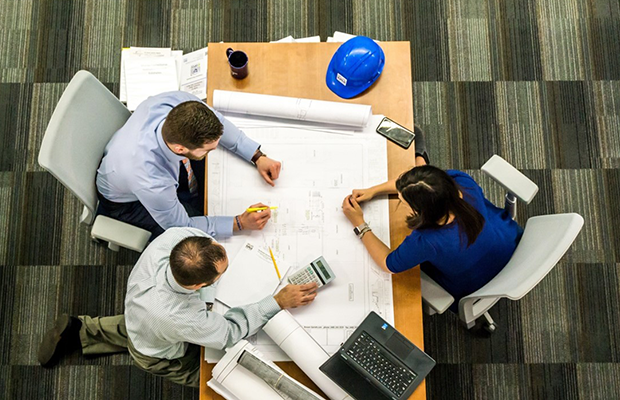
For the engineer, however, the discipline is struggling to recruit young professionals. According to him, "few specialized trainings". allow young people to acquire the knowledge necessary for both the architect's and the engineer's expertise. This dual role is the main selection criterion for candidates, which often reduces the number of potential hires.
On the other hand, schools and universities regularly welcome students who, after their initial studies in engineering, redirect themselves to specialized courses in urban studies and architecture, which allows them to obtain the dual skills so sought after by design offices... and by the imperatives of the urban fabric.
Translated from French
For the engineer, however, the discipline is struggling to recruit young professionals. According to him, "few specialized trainings". allow young people to acquire the knowledge necessary for both the architect's and the engineer's expertise. This dual role is the main selection criterion for candidates, which often reduces the number of potential hires.
On the other hand, schools and universities regularly welcome students who, after their initial studies in engineering, redirect themselves to specialized courses in urban studies and architecture, which allows them to obtain the dual skills so sought after by design offices... and by the imperatives of the urban fabric.
Translated from French
Source: https://www.demainlaville.com/demain-la-ville-ingenierie-environnementale/